
Homemade Roasted Garlic Herb Bagels
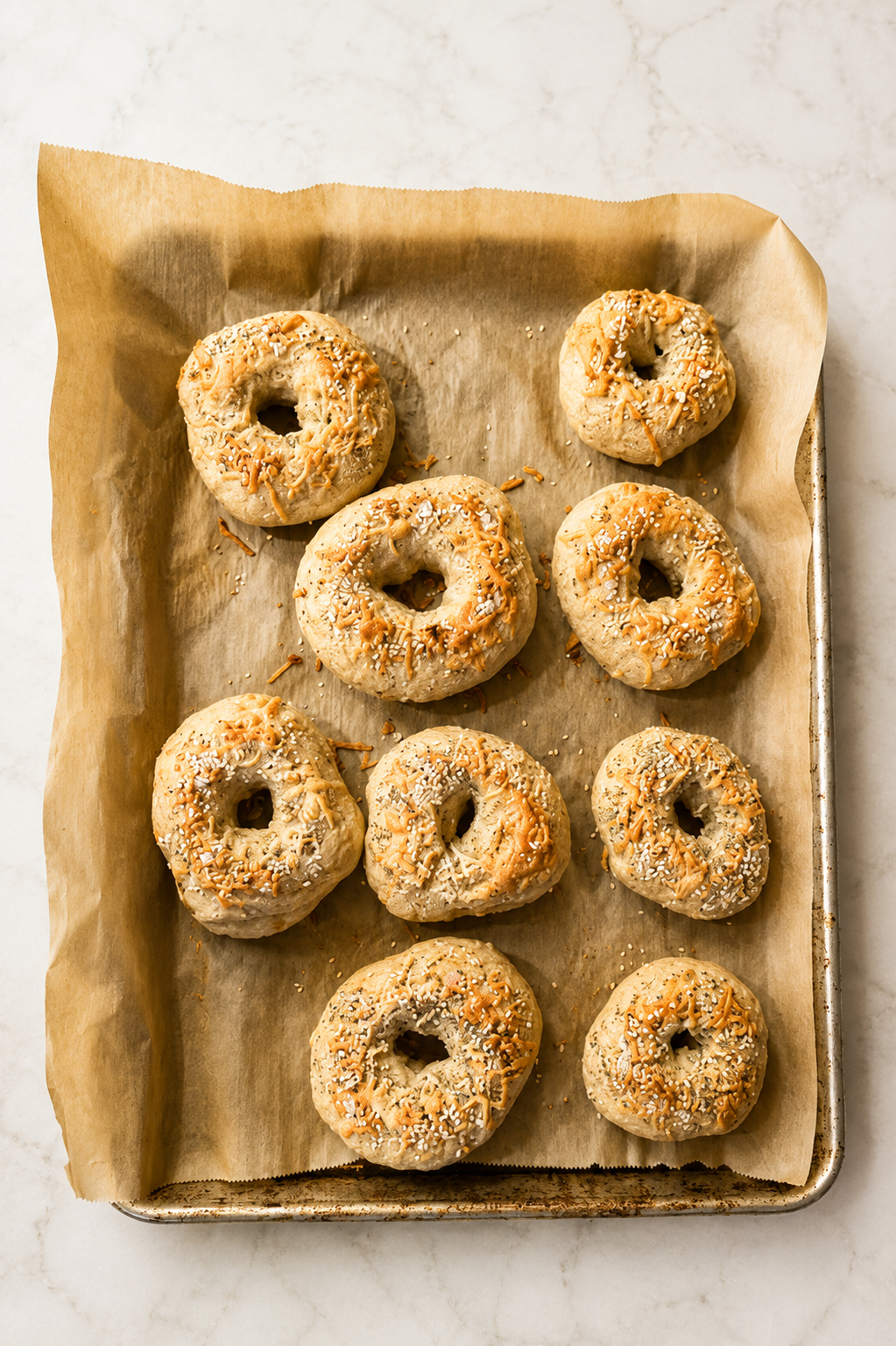
Chewy Homemade Bagels With Roasted Garlic, Parmesan and Herbs
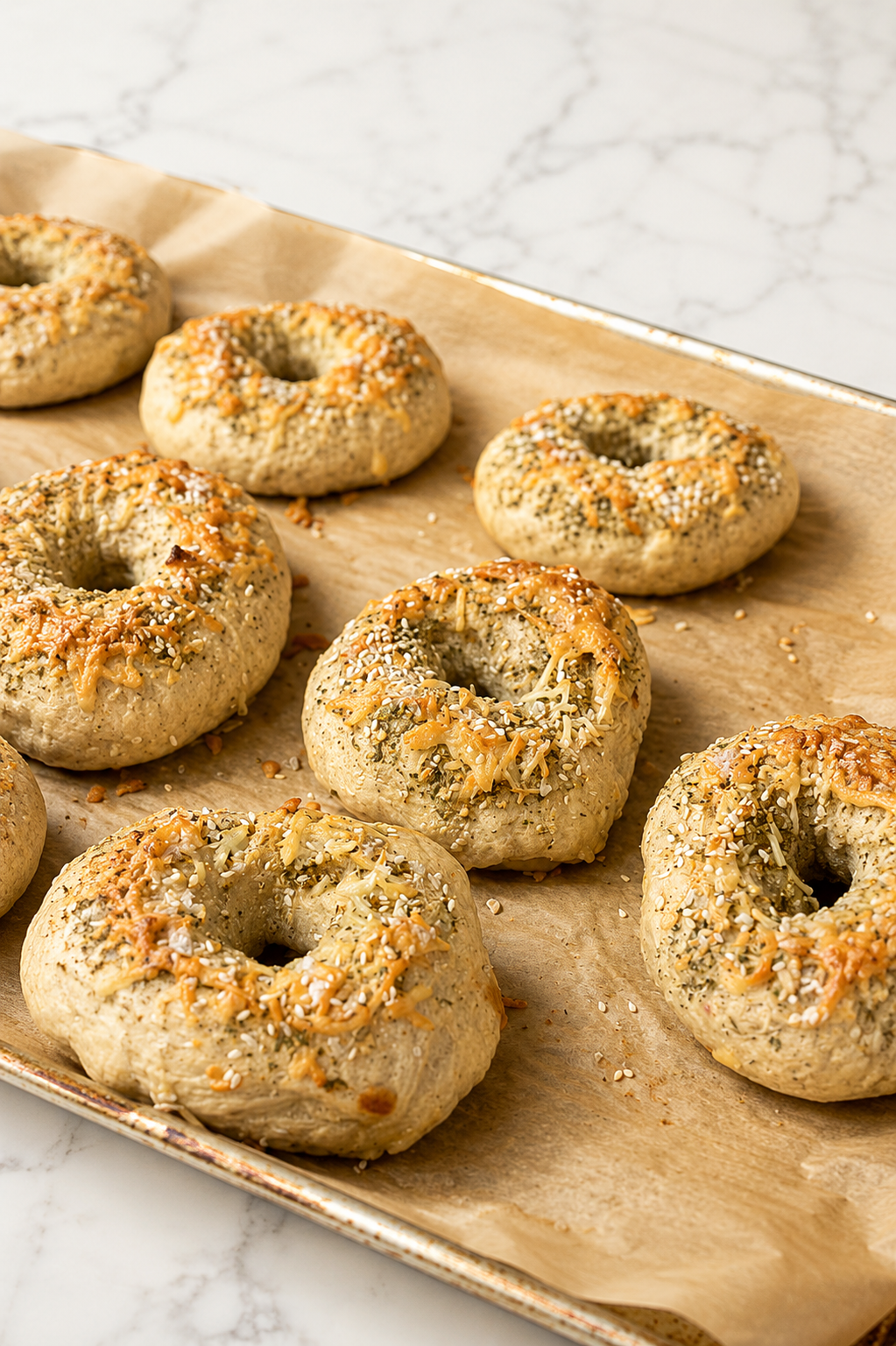
These homemade roasted garlic herb bagels are chewy on the outside, soft inside, and filled with creamy roasted garlic throughout the dough. They are boiled before baking for a traditional bagel texture, then finished with Parmesan, sesame seeds, garlic, onion, and parsley.
Once you learn this core bagel recipe, you can turn it into almost anything: everything bagels, cheese bagels, fresh herb bagels, sweet fruit bagels, or completely plain bagels.
Pinterest Family—Here’s the Recipe
You came for the recipe, so I won’t make you hunt for it. Here is everything you need to start baking.
Roasted Garlic Herb Bagels
Prep time: Approximately 30 minutes
Rise time: Approximately 1 hour
Resting time: 15–20 minutes
Boiling time: Approximately 8–10 minutes
Baking time: 20–25 minutes
Makes: 8 bagels
For the Bagel Dough
4 cups (500 grams) bread flour, plus more as needed
1½ cups warm water, approximately 110°F (43°C)
2¼ teaspoons active dry or instant yeast
1 tablespoon honey or real cane sugar
2 teaspoons salt
7–12 soft roasted garlic cloves
For Boiling
Large pot of water
1 tablespoon honey or brown sugar, optional
Garlic Herb Topping
⅓ cup finely grated Parmesan
2 tablespoons white sesame seeds
1 tablespoon dried parsley
1 teaspoon garlic powder
1 teaspoon onion powder
Everything bagel seasoning, optional
The Short Version
Mix the warm water, honey, and yeast and allow it to become foamy. Add the flour and salt, then knead for 8–10 minutes. Add the roasted garlic near the end of kneading and work it throughout the dough.
Cover and allow the dough to rise for approximately 1 hour, or until doubled.
Divide the dough into eight pieces and form each one into a bagel. Rest for 15–20 minutes while the oven heats to 425°F.
Boil the bagels for 30–60 seconds per side. While they are still wet, dip or sprinkle them with the garlic herb topping.
Bake for 20–25 minutes, or until deeply golden. Cool for at least 15 minutes before slicing.
From My Kitchen
These bagels are surprisingly simple, and this garlic herb version was inspired by something I already had in my kitchen.
I had extra roasted garlic left over, and roasted garlic is too delicious to waste. When garlic is slowly cooked in good extra-virgin olive oil, it becomes soft, creamy, and spreadable—almost like butter.
Instead of spreading it onto the finished bagels, I decided to work it directly into the dough.
I added somewhere between seven and twelve whole roasted garlic cloves. Because the garlic was already so soft, it did not leave large pieces throughout the dough. It blended into the bread as I kneaded, distributing that sweet, savory roasted-garlic flavor throughout every bagel.
Before baking, I dipped the boiled bagels into a mixture of onion powder, garlic powder, parsley, white sesame seeds, and Parmesan. If I had everything bagel seasoning in the kitchen, I would have added that too—or used the same dough to create a second batch with a different topping.
That is what I love about having a reliable core recipe. Once you understand how to make the dough, you can customize it with whatever you have and make it your own.
Why This Recipe Works
Bread flour creates a chewy texture
Bread flour contains more protein than ordinary all-purpose flour. As the dough is kneaded, that protein develops into a stronger gluten structure, producing the dense, chewy texture associated with traditional bagels.
All-purpose flour will still work, but the bagels may be slightly softer.
Roasted garlic blends into the dough
Raw garlic could leave sharp pieces and may interfere with the flavor and texture of the dough.
Slowly roasted garlic becomes soft, mellow, slightly sweet, and easy to incorporate. It spreads through the dough rather than remaining in large chunks.
The firm dough gives bagels their structure
Bagel dough should be firmer than ordinary sandwich-bread dough. It may require a little more effort to knead, but that firmness helps the bagels maintain their shape during boiling and baking.
Boiling creates the traditional crust
Boiling partially sets the exterior before the bagels enter the oven. This creates their recognizable chewy crust and prevents them from expanding like ordinary bread rolls.
Boiling for 30 seconds per side creates a slightly lighter texture. Boiling closer to 60 seconds per side makes the bagels chewier.
Honey supports browning
A small amount of honey or brown sugar in the boiling water encourages a shinier, more deeply colored crust. It is optional, but it gives the bagels a more traditional bakery-style finish.
How to Make Roasted Garlic
If you do not already have roasted garlic, you can prepare it before making the dough.
Place peeled garlic cloves in a small oven-safe dish and cover them with extra-virgin olive oil. Cover the dish and roast at approximately 275°F until the cloves are golden, extremely soft, and easily mashed with a fork, usually about 45–60 minutes.
Allow the cloves to cool slightly before adding them to the dough.
You can also roast an entire garlic bulb. Slice off the top, drizzle it with olive oil, wrap it in parchment and foil, and roast until soft. Squeeze the cloves from their skins once cool enough to handle.
A Note About Garlic Stored in Oil
Homemade garlic in oil should never be stored at room temperature. Make it fresh, refrigerate it promptly at 40°F or colder, and use it within four days—or freeze it for longer storage.
A Closer Look at the Ingredients
Bread Flour
Bread flour will give you the chewiest result. All-purpose flour can be substituted in the same amount, although the texture may be somewhat softer.
The exact amount of flour you need may vary slightly depending on humidity, how the flour was measured, and how much oil accompanies the roasted garlic.
Yeast
Both active dry and instant yeast work.
When using active dry yeast, combine it with the warm water and honey and wait 5–10 minutes for it to become foamy.
Instant yeast can technically be mixed directly into the flour, but blooming it first is still a simple way to confirm that it is active.
Water
The water should feel warm but not hot. A temperature of approximately 110°F is ideal.
Water that is too hot can damage or kill the yeast. Water that is too cool will not necessarily ruin the dough, but the rise will take longer.
Roasted Garlic
Use approximately 7–12 cloves, depending on their size and how strongly you want the garlic to come through.
Drain away excess oil before adding the cloves. They should be soft enough to spread when pressed.
Parmesan
Finely grated Parmesan adheres better than large shreds and creates a more even golden topping.
Freshly grated Parmesan will generally melt and brown more naturally than shelf-stable powdered cheese.
How to Make Homemade Garlic Herb Bagels
1. Activate the yeast
Combine the warm water, honey, and yeast in a large mixing bowl.
Allow the mixture to rest for 5–10 minutes, or until the surface becomes foamy.
If the yeast does not show any activity, it may be expired, or the water may have been too hot or too cold.
2. Make the dough
Add the bread flour and salt to the yeast mixture.
Mix until a shaggy, firm dough forms. Turn it onto a lightly floured surface or use a stand mixer fitted with a dough hook.
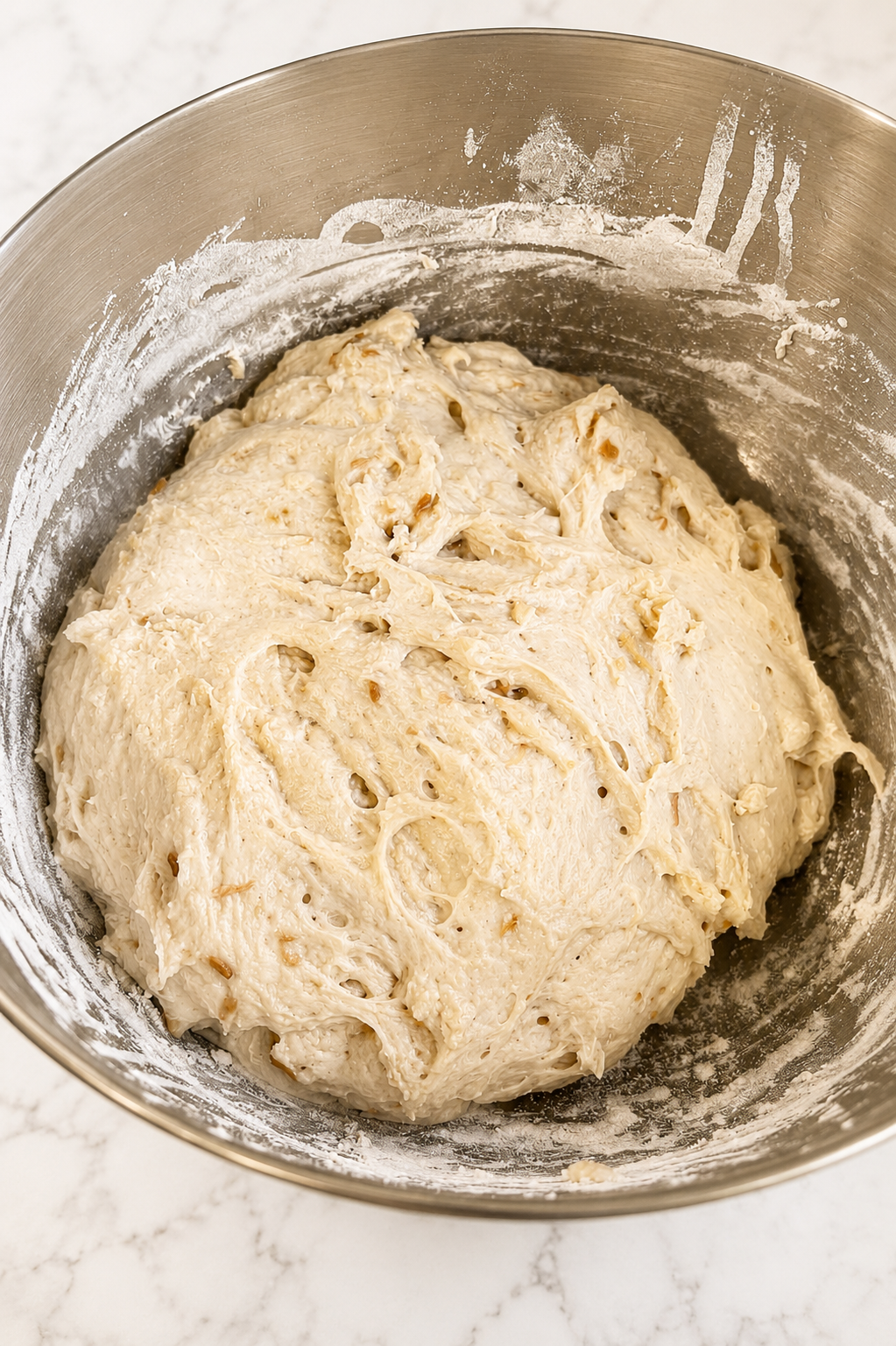
Knead for approximately 8–10 minutes, or until the dough becomes smooth and elastic.
Bagel dough is supposed to be firmer than ordinary bread dough. Avoid adding additional water simply because it feels sturdy.
3. Add the roasted garlic
During the final few minutes of kneading, add the soft roasted garlic cloves.
Continue kneading until the garlic becomes incorporated throughout the dough. You may still see tiny golden streaks or pieces, but there should not be large, separate cloves remaining.
If the olive oil from the garlic makes the dough sticky, add flour approximately 1 tablespoon at a time.
4. Allow the dough to rise
Place the dough in a clean bowl and cover it with a damp towel, reusable cover, or plate.
Allow it to rise in a warm place for approximately 1 hour, or until doubled in size.
The exact time will depend on the temperature of your kitchen.
5. Divide and shape the bagels
Turn the risen dough onto a clean surface and divide it into eight relatively even pieces.
Roll each piece into a smooth ball. Poke your finger through the center and gently stretch the opening until it is approximately 1½–2 inches wide.
The hole will shrink during resting, boiling, and baking, so make it slightly larger than you think it needs to be.
You can also roll each piece into a rope and pinch the ends firmly together.
6. Rest the shaped bagels
Place the shaped bagels on parchment paper and cover them loosely.
Allow them to rest for 15–20 minutes while you preheat the oven to 425°F (220°C) and prepare the boiling water.
For a deeper flavor, refrigerate the covered, shaped bagels overnight. Boil and bake them the following morning.
7. Prepare the topping
Combine the Parmesan, sesame seeds, parsley, garlic powder, and onion powder in a shallow bowl or plate.
Add everything bagel seasoning if you have it, or divide the mixture and make several different topping combinations.
8. Boil the bagels
Bring a large pot of water to a gentle boil. Add 1 tablespoon of honey or brown sugar, if desired.
Working in batches, lower the bagels carefully into the water.
Boil for 30–60 seconds on the first side, flip, and boil for another 30–60 seconds.
Avoid overcrowding the pot. The bagels need enough room to float without pressing into one another.
9. Add the topping
Remove each bagel with a slotted spoon and allow the excess water to drain briefly.
While the surface is still wet, dip the top into the garlic herb mixture or place it on the baking sheet and sprinkle the topping generously over it.
Press very lightly to help the Parmesan, herbs, and seeds adhere.
10. Bake until golden
Arrange the bagels on a parchment-lined baking sheet.
Bake at 425°F for 20–25 minutes, or until the tops and bottoms are deeply golden.
Transfer the bagels to a cooling rack and allow them to rest for at least 15 minutes before slicing. The centers will continue setting as they cool.
Cassidyy’s Real-Food Notes
Making bagels at home sounds like a major project until you actually do it.
The ingredients are simple: flour, water, yeast, honey, salt, and whatever real ingredients you want to add for flavor. The only unusual step is boiling, and even that takes only a few minutes.
Having a core recipe like this is part of becoming more confident in the kitchen. You are not limited to whatever flavors or ingredient lists are available at the store.
You can make them plain. You can use leftover herbs or roasted garlic. You can add real cheese, seeds, fruit, spices, or seasonings. One recipe becomes the foundation for dozens of different breakfasts.
Flavor Variations
Everything Bagels
Leave the roasted garlic in the dough or omit it. Top the boiled bagels generously with everything bagel seasoning.
Parmesan Herb Bagels
Add fresh rosemary, thyme, parsley, or chives to the dough and top with finely grated Parmesan.
Cheddar Bagels
Fold shredded cheddar into the dough near the end of kneading and add more cheese to the tops before baking.
Cinnamon Raisin Bagels
Omit the garlic and savory topping. Knead cinnamon and raisins into the dough, adding a small amount of flour if the fruit makes it sticky.
Blueberry Bagels
Omit the garlic. Gently knead dried or well-drained blueberries into the dough. Fresh berries can add considerable moisture, so they may require additional flour.
Plain Bagels
Leave out the roasted garlic and toppings completely. The basic dough still creates a delicious, chewy homemade bagel.
Troubleshooting
Why didn’t my dough rise?
The yeast may have been expired, or the water may have been too hot. Your kitchen may also be cool, causing the rise to take longer.
Place the covered dough somewhere gently warm and give it additional time.
Why is my dough sticky?
The garlic may have carried additional olive oil into the dough. Add bread flour 1 tablespoon at a time until the dough becomes smooth and workable.
Bagel dough should feel firm and slightly tacky, but it should not coat your hands.
Why are my bagels flat?
The dough may have overproofed, the bagels may have rested too long, or the water may have been boiling too aggressively.
Use a gentle boil and handle the shaped bagels carefully.
Why did the holes close?
The holes were not stretched wide enough before resting and boiling. Begin with a center opening approximately 1½–2 inches wide.
Even if the center closes, the result will still taste delicious—it may simply resemble a bagel-shaped roll.
Why are the bagels too dense?
Bagels should be denser than ordinary bread, but excessively dense bagels may result from adding too much flour, insufficient kneading, or not allowing the dough to rise completely.
Why did my toppings fall off?
Add the toppings while the boiled bagels are still wet. Finely grated cheese and smaller seeds will adhere better than large, heavy pieces.
What to Serve With Garlic Herb Bagels
These bagels are delicious served warm with butter or cream cheese, but they can also become the foundation of an entire meal.
Try them with:
Whole or scrambled eggs
Sausage and egg
Bacon, egg, and cheese
Cream cheese and smoked salmon
Sliced chicken or turkey
Tomato, cream cheese, and fresh herbs
Butter and additional roasted garlic
A bowl of homemade soup
Egg salad
A breakfast sandwich
The garlic and herbs make them especially good beside eggs in the morning, but they are savory enough to use for lunch sandwiches too.
How to Store Homemade Bagels
Allow the bagels to cool completely before storing them.
Keep them in an airtight container at room temperature for approximately 2–3 days. For longer storage, slice and freeze them.
Place parchment between the bagels or freeze them individually before transferring them to a freezer bag. Frozen bagels can be placed directly into a toaster or allowed to thaw at room temperature.
Homemade bagels do not contain the preservatives found in many packaged versions, so freezing extras is the best way to maintain their texture.
Frequently Asked Questions
Do homemade bagels have to be boiled?
Boiling creates the characteristic chewy crust and dense structure of a traditional bagel.
You can bake shaped dough without boiling it, but the result will be closer to a ring-shaped bread roll.
Can I use all-purpose flour?
Yes. Substitute it in the same amount. The bagels will still work, but bread flour produces a chewier texture.
Can I prepare the bagels overnight?
Yes. Shape the bagels, cover them, and refrigerate overnight. Boil and bake them the next morning.
The slow rest can create a deeper flavor and makes it easier to serve freshly baked bagels for breakfast.
Can I use raw garlic instead?
Roasted garlic is preferable because its flavor is sweeter and less sharp, and its creamy texture blends easily into the dough.
If using raw garlic, mince it very finely and use a smaller amount.
Can I make the dough in a stand mixer?
Yes. Use the dough hook and knead on a low to medium-low speed until the dough is smooth and elastic. Because bagel dough is firm, avoid using a high speed.
Can I make these without the garlic?
Absolutely. This is a customizable core bagel recipe. Omit the garlic and create any savory or sweet variation you want.
The Recipe First. The Story When You’re Ready.
Learning one reliable dough recipe gives you more than one kind of bagel.
It gives you a foundation you can return to, change with the seasons, and adapt to whatever is already in your kitchen.
This batch began with extra roasted garlic. The next could become everything bagels, fresh herb bagels, cheese bagels, or something completely new.
That is one of the freedoms of learning to cook with real food: you stop needing a separate packaged product for every flavor you enjoy. You learn the foundation—and then you make it your own.