
Why I Don’t Eat Seed Oils—and the Traditional Fats I Use Instead

A few years ago, I started taking a much closer look at the food I was eating—not just the obvious things, but the everyday ingredients hiding in plain sight.
One of the biggest changes I made during my health journey was removing processed seed oils from my pantry and fridge as much as possible, after I started researching and understanding how the body responds to these toxic oils.
Before then, I really hadn’t thought much about cooking oil.
It was simply what went into the skillet, onto the baking sheet, or inside a bottle of salad dressing. But once I began reading ingredient labels, I realized they were in almost everything: chips, crackers, sauces, dressings, mayonnaise, restaurant food, and even products marketed as "healthy."
My goal has never been to follow a perfect diet or make food feel frightening. But the more I learned, the more these oils didn't align with my health and wellness goals. When you know better, do better.
I simply want to eat ingredients as close to their original form and traditional use as possible—food I can recognize, understand, and confidently cook for the people I love.
So I returned to fats people cooked with long before the industrial food system: butter, beef tallow, ghee, duck fat, lard, and the natural fat already present in meat. I also use carefully sourced olive oil and avocado oil.
And honestly? My food became more flavorful, more satisfying, and much more fun to cook! Not just that, I became healthier and healthier the more I removed the processed seed oils and food from our kitchen.
Once you start eating and cooking with lower-inflammation traditional oils and fats, you will never go back! If you have ever eaten a homemade tortilla chip fried in beef tallow, you already understand. :)
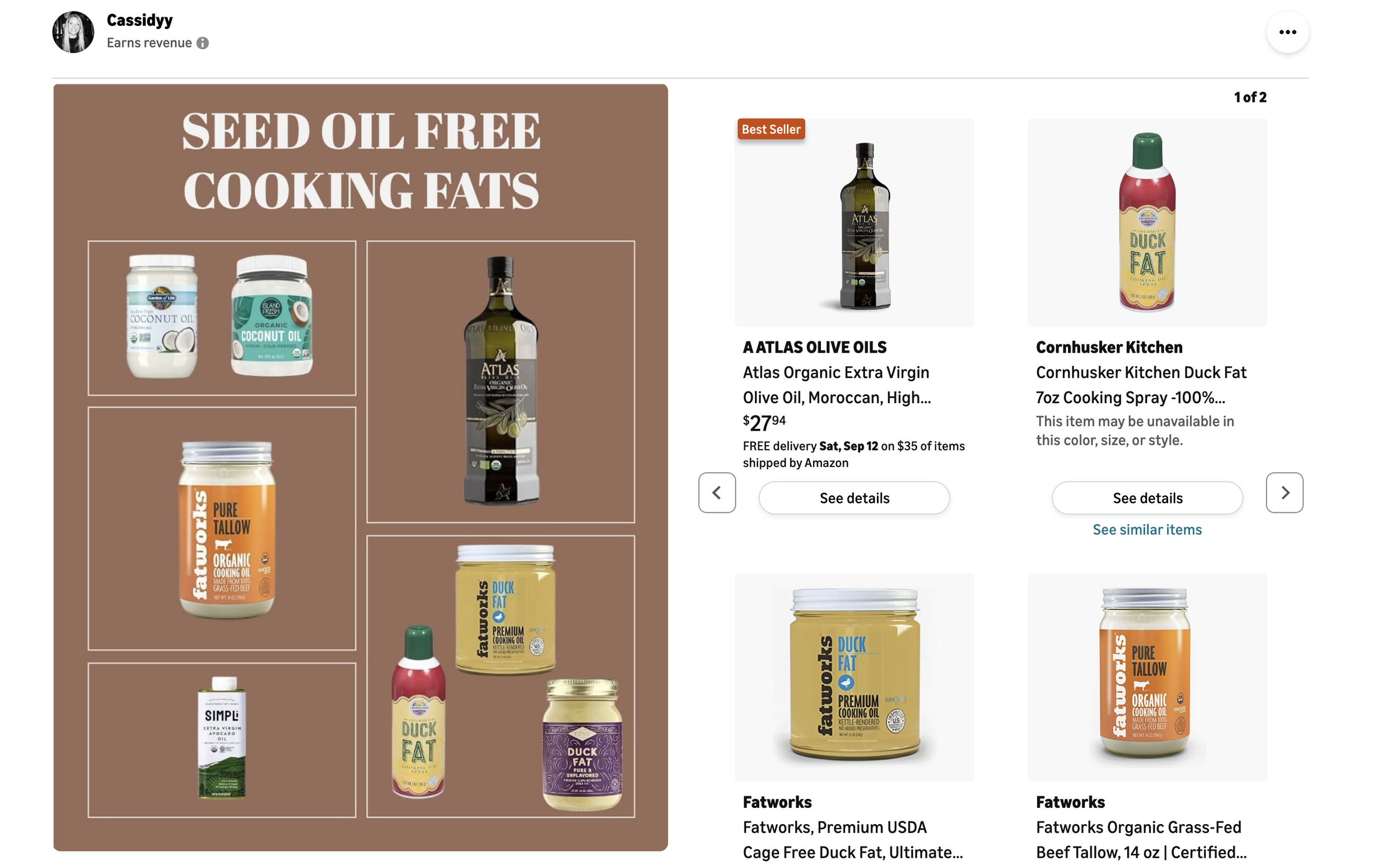
Keep reading or shop my favorite traditional cooking fats →
This post contains affiliate links. I may earn a small commission from qualifying purchases at no additional cost to you.
Already looking to to put this into practice?
Knowing what to look for is a start. Let’s bring it into your kitchen. Join my free 7-Day Seed Oil Free Challenge for one manageable change each day—from reading labels and swapping pantry staples to cooking and eating out with more confidence.
Start the free 7-day challenge ↗
Want to explore first? Browse Seed Oil Free Kitchen →
First, What Are Seed Oils?
Seed oils are oils extracted from the seeds of plants. When people talk about avoiding “seed oils,” they are usually referring to highly processed oils such as:
Canola oil
Soybean oil—often labeled simply as vegetable oil
Corn oil
Cottonseed oil
Sunflower oil
Safflower oil
Grapeseed oil
Rice bran oil
Peanut oil
These oils are inexpensive, mild tasting, and easy for food manufacturers to use, which is one reason they now appear in so many packaged and restaurant foods.
It is important to understand that seed oil and PUFA do not mean exactly the same thing. Seed oil describes where an oil comes from. PUFA stands for polyunsaturated fatty acid, which is a type of fat. Every cooking fat contains its own mixture of saturated, monounsaturated, and polyunsaturated fats—even traditional animal fats contain some PUFAs.
Why I Choose Not to Eat Them
There isn’t just one reason. It is the combination of how these oils are made, how frequently they appear in modern food, how they may respond to heat and storage, and the fact that I have traditional alternatives I genuinely prefer.
But the biggest reason is this: I believe the enormous amount of heavily processed seed oils in the modern diet contributes to chronic inflammation—and chronic inflammation is at the root of many larger health problems.
Inflammation itself is not always bad. It is part of the body’s natural defense and healing response. Think about when you roll your ankle and it puffs up; that's an example of inflammation in the body, sending a distress signal that the area needs attention and healing.
The concern is chronic inflammation—when that response remains activated over time instead of resolving as it should.
Chronic inflammation can affect the entire body, sending constant stress and alarm signals, and is connected to many of the larger health problems affecting people today, including:
Insulin resistance and type 2 diabetes
Obesity and metabolic dysfunction
Heart and blood-vessel disease
Fatty liver disease
Autoimmune and inflammatory conditions
Joint pain and arthritis
Cognitive decline and neurodegenerative disease
Certain cancers
That is why this matters so much to me. Seed oils are not an occasional ingredient in the modern diet. They are used over and over throughout the day—in restaurant meals, packaged snacks, dressings, sauces, mayonnaise, frozen foods, and products marketed as healthy. All of that adds up.
I believe this constant exposure places an unnecessary inflammatory burden on the body. Removing seed oils is one direct, practical way I can reduce that burden and better support the way the body was designed to function.
Cook With Real Food · Know your ingredients
Why I choose lower-linoleic-acid fats.
“I avoid seed oils because I choose to limit linoleic acid. I believe high intakes contribute to chronic inflammation in the body—a process involved in many illnesses and diseases.”
— Cassidyy
How much linoleic acid is in each oil or fat?
Each full bar represents 100% of that oil or fat’s fatty acids. The colored portion is linoleic acid (LA); the pale remainder represents other fatty acids. A value of 70% means approximately 70 out of every 100 parts are linoleic acid.
- Safflower70%
- Grapeseed70%
- Sunflower68%
- Corn54%
- Cottonseed52%
- Soybean51%
- Rice bran33%
- Peanut32%
- Canola19%
- Olive oil10%
- Avocado oil10%
- Lard10%
- Palm oil10%
- Tallow · conventional3%
- Butter · conventional2%
- Coconut oil2%
- Tallow · grass-fed1%
- Butter · grass-fed1%
Approximate linoleic acid (LA), as a share of total fatty acids.
Reference-image estimates, not product test results. Composition varies. This compares fat composition—not measured inflammation or overall healthfulness.
About the numbers & the science
The color bands are visual groupings chosen for this chart, not clinical cutoffs, inflammation scores, or safety ratings. They describe linoleic acid content only.
The values above are transcribed from the reference graphic supplied by Cassidyy. Its original analytical source is not identified, so these figures have not been independently verified. They are illustrative estimates, not universal averages or brand guarantees.
Sunflower and safflower figures refer to conventional, linoleic-rich varieties; high-oleic versions can differ considerably. Animal feed and production affect fat composition; “grass-fed” does not guarantee 1% linoleic acid. The supplied graphic lists olive oil at 10%, with a 3–27% range. “Conventional” corresponds to its CAFO labels.
For independent composition ranges, see the FAO/Codex fatty-acid tables. These tables provide context, not verification of every figure above.
Cassidyy’s statement expresses her personal food philosophy. Linoleic acid is an essential omega-6 fat. A systematic review of randomized human trials found little evidence that increasing it raises inflammatory markers in healthy adults. A lower percentage alone does not establish that a fat prevents inflammation.
1. Now I prefer fats with a long history in the kitchen
Butter, tallow, lard, ghee, and olive oil are not new inventions. People have prepared food and thrived with them for generations.
That does not automatically make every traditional food perfect or every modern food harmful. But when I have the choice, I would rather cook with a recognizable fat connected to an animal, fruit, or traditional process than make an industrially refined oil the foundation of my diet.
That is the heart of Cook With Real Food: not chasing perfection, but returning to ingredients we can understand.
Not only that, there are countless studies contributing to lower inflammation and other overall health benefits of traditional olive oil!
2. Seed oils are extremely easy to overconsume
Linoleic acid is an omega-6 fatty acid found in many seed oils. It is essential, meaning the body needs some from food. My concern is not that a naturally occurring nutrient exists—it is how dramatically our exposure has changed now that inexpensive oils are added to so many foods.
Research has documented a substantial rise in linoleic acid within the body fat of American adults over the past several decades, alongside major changes in the fats available in the food supply. That does not prove seed oils caused every modern metabolic condition, but it does show how profoundly the composition of our diet has shifted. Read the study on changes in adipose-tissue linoleic acid.
When I cook at home with whole ingredients, I am no longer unknowingly getting the same handful of refined oils from breakfast, lunch, dinner, snacks, sauces, and dressings.
Some studies suggest that the average American could be eating up to 5 tablespoons or more of these oils a day. Most manufactured or processed oils have been in the marketplace for only the last 50-100 years, making them the most consumed fat compared to years prior and making us the first generation to be exposed to this level of these types of fat in history. It's not unfair to see how the rise of modern disease could be connected to poorer-quality fat, altering mitochondria and the body at the cellular level.
Cook With Real Food · The bigger picture
The oil versus
the whole source.
An ear of corn, a handful of seeds, or a cup of rice is very different from the oil extracted from it. Whole food comes with fiber, water, and other nutrients. Oil concentrates the fat.
Four separate illustrations using published estimates. Quantities are not independently verified or nutritional equivalents; five tablespoons is not a measured daily average.
5 tbsp of corn oil
Published production estimate
98ears of corn
Each symbol represents 1 ear
Corn oil is extracted primarily from the germ of the kernel.
5 tbsp of sunflower oil
Published production estimate
2,800sunflower seeds
Each symbol represents 50 seeds
The symbols represent seeds, not whole sunflower heads.
5 tbsp of grapeseed oil
Published production estimate
625grapes
Each symbol represents 25 grapes
The oil comes from the seeds, not the flesh or juice.
5 tbsp of rice bran oil
Published production estimate
40cups of brown rice
Each symbol represents 1 cup
The oil comes from the bran. The source does not specify cooked or dry cups.
The amount is easier to miss when it’s already in your food.
A pile of whole food is hard to overlook. A few spoonfuls of extracted oil can disappear into restaurant meals, dressings, sauces, and packaged foods. You don’t see the source—you eat the finished meal.
That’s why I read ingredient lists and ask what restaurants cook with. Corn, soybean, sunflower, grapeseed, and rice bran oils can show up throughout the day. If you’re not checking, you could be eating more of these oils than you realize.
“If you can’t eat it as real food, you probably shouldn’t eat it at all.”
— Cassidyy’s personal kitchen rule: a reminder to look beyond the front label.
Read the source & understand the comparison
FootPrint Coalition’s Zero Acre Farms feature publishes the four estimates used here while promoting an alternative cooking oil. The page does not provide calculations, crop specifications, extraction efficiencies, or a cooked-versus-dry definition for the rice. These figures should not be treated as precise production requirements.
Production yield and the fat naturally present in an edible serving are different measurements. Extracting oil from corn germ, grape seeds, or rice bran is not nutritionally equivalent to eating the same count of whole foods. Processing also leaves other materials and coproducts; this is not a food-waste calculation.
Further reading: Dr. Cate Shanahan’s perspective on seed oils. The food-production estimates illustrated above come from FootPrint Coalition.
Concentration alone does not determine whether a food is harmful. Olive oil, butter, and other extracted fats are concentrated too. This illustration explains Cassidyy’s interest in ingredients and portions; it does not measure inflammation or prove a health effect.
3. Polyunsaturated oils are vulnerable to oxidation
Polyunsaturated fats contain multiple double bonds in their chemical structure. Those bonds make them more susceptible to oxidation—the process of reacting with oxygen and beginning to break down.
Heat, light, time, and repeated frying can accelerate that deterioration. As oils oxidize, they can form breakdown products such as aldehydes. Researchers continue to study what those compounds may mean for long-term health, but this is enough for me to be thoughtful about the fats I heat and how often cooking oil is reused.
This does not mean traditional fats are indestructible. Any cooking fat can be overheated, stored poorly, or allowed to become rancid. I use fresh fat, store it properly, match it to the cooking method, and do not repeatedly heat the same frying oil.
My interview with Zane Griggs: “The Shocking Truth About Seed Oils and Their Impact on Our Health”
4. Avoiding them naturally moves me toward real food
This may be the most practical reason of all.
When you start reading labels for soybean, canola, corn, and sunflower oil, you quickly realize how many ultra-processed foods contain them. Avoiding those oils naturally encourages me to cook more meals at home, make simple dressings and sauces, and rely on real recognizable ingredients.
After looking at the total picture, I know I do not want these oils in my kitchen. I have traditional options that I trust and enjoy more, and leaving processed seed oils out supports both my health and the kind of food culture I want to build.
It's an easy way to start making better choices for your health!
Where Seed Oils Hide
Removing the vegetable oil bottle from the pantry is the easy part. The bigger surprise is learning where else these oils appear.
I check labels on:
Salad dressings, mayonnaise, condiments, etc.
Chips and crackers
Granola and protein bars
Bread and tortillas
Jarred sauces and marinades
Frozen meals
Nut and oat milks
Restaurant dressings, fried foods, and sauces
Products advertised as organic, keto, plant-based, or heart healthy
Pretty much anything in a bag, box, bottle, or package. More seed oil-free options hit shelves all the time!
A beautiful front label cannot tell you what is inside. Flip it over and read the actual ingredient list—that habit will teach you more than almost anything printed on the package.
The Traditional Cooking Fats I Actually Use
You do not need to buy every option below. Start with one or two fats that fit the meals you already make.
Beef Tallow: My Favorite for Frying
Beef tallow is rendered beef fat. It is naturally solid at room temperature and works beautifully for frying, roasting, and browning.
This is one of the fats that made seed-oil-free cooking feel exciting instead of restrictive. Tallow gives food an incredible savory flavor and helps create a crisp, golden exterior.
My favorite thing to make with it is homemade corn tortilla chips. I promise, once you taste a warm tortilla chip fried in beef tallow with a little salt, it is hard to look at a bagged chip the same way again.
If you have my cookbook, use it for the Plantain Hash Browns too!
Use it for: tortilla chips, potatoes, plantains, browning meat, and high-heat roasting.
Shop the traditional fats I use →
Butter: My Everyday Kitchen Staple
Butter is a historical favorite for a reason. I use it for eggs, vegetables, baking, bread, sauces—or pretty much anything that could use a little more goodness.
I buy the best quality that is realistically available to me. Grass-fed or pasture-raised butter is my preference, but real food should not become an all-or-nothing standard. Good butter that fits your budget is a perfectly reasonable place to start.
Because butter contains milk solids, it can brown or burn at higher temperatures. I keep it to moderate heat and reach for ghee or tallow when the pan needs to get hotter.
Use it for: scrambled eggs, sautéed vegetables, baking, sauces, and finishing a dish.
My kitchen tip: Butter freezes beautifully. When it goes on sale, stock up and freeze the extra. You are going to use it anyway!
And if you have never made butter from cream, try it at least once. It is surprisingly simple and such a satisfying connection to how food is actually made.
Duck Fat: The Secret to Incredible Potatoes
Duck fat has a silky texture and rich, savory flavor. It is especially famous for creating potatoes that are crisp on the outside and soft and fluffy inside.
I also use it for roasting vegetables and meat. Sometimes I add a small spoonful to a pot of soup or broth to give it more body and depth.
You do not need much. A little duck fat can make a very simple meal feel special.
Use it for: roasted potatoes, root vegetables, savory roasting, and adding richness to soups.
Ghee: Buttery Flavor That Handles More Heat
Ghee is butter that has been gently cooked so the water and milk solids can be removed. The result is a rich, nutty cooking fat that can tolerate more heat than ordinary butter.
It is one of my favorites for sautéing and frying. A little goes a long way, and I sometimes combine it with avocado oil when I want the flavor of ghee to stretch further.
Because most of the milk solids have been removed, ghee is very low in lactose. Some people who do not tolerate regular butter find that ghee works for them, although it is still dairy-derived and is not automatically safe for someone with a milk allergy.
Use it for: sautéing, pan-frying, browning, eggs, vegetables, and anytime you want buttery flavor at a higher temperature.
Avocado Oil: My Neutral, Versatile Option
Avocado oil is made from the flesh of the fruit rather than the seed. It has a mild flavor, which makes it useful when I do not want the cooking fat to change the taste of the meal.
Refined avocado oil generally handles higher temperatures than unrefined avocado oil, so check the bottle and use it according to the producer’s directions.
Quality matters. Testing has found purity and freshness problems in some avocado oils, so I look for trusted producers, clear sourcing, and third-party testing when available. A high price alone is not proof of quality. Read the UC Davis research on avocado-oil quality.
Use it for: roasting, baking, sautéing, homemade mayonnaise, and recipes that need a neutral flavor.
Extra-Virgin Olive Oil: My Favorite for Dressings and Sautéing
Extra-virgin olive oil is what I reach for when I am making salad dressing, dipping bread, or finishing vegetables, soup, meat, or grilled fish.
It brings its own fruity, sometimes peppery flavor to a dish. That little peppery feeling in the back of your throat can come from naturally occurring polyphenols, although it is not a foolproof test of purity.
Olive oil does not have to be reserved only for cold food. Good extra-virgin olive oil can be used for many everyday cooking methods too. I simply tend to save mine for dressings and finishing because that is where I enjoy its flavor most.
Keep the bottle tightly closed and away from light and heat. Olive oil is fresh food, not something that improves after sitting beside a hot stove for years.
Use it for: dressings, dips, marinades, moderate-heat cooking, and drizzling over a finished meal.
Lard, Bacon Grease, and the Fat Already in the Pan
Lard is rendered pork fat. It is wonderful for savory cooking and makes beautifully flaky pie crusts and biscuits.
I also save naturally rendered fat from meat when it makes sense. Bacon grease adds a smoky, salty flavor to vegetables, eggs, beans, and potatoes.
When you cook as much meat as I do, you start to notice that you often do not need to add much extra oil at all. Sometimes the cooking fat is already right there in the pan.
If you save meat drippings, strain out the food particles, place the fat in a clean container, refrigerate it promptly, and use or freeze it within a reasonable time.
Use it for: savory vegetables, eggs, potatoes, beans, biscuits, pie crusts, and making the most of what you already cooked.
Ready to put this into practice?
Knowing what to look for is a start. Let’s bring it into your kitchen. Join my free 7-Day Seed Oil Free Challenge for one manageable change each day—from reading labels and swapping pantry staples to cooking and eating out with more confidence.
Start the free 7-day challenge ↗
Want to explore first? Browse Seed Oil Free Kitchen →
This article shares my personal food philosophy and is intended for education and cooking inspiration. It is not medical advice.
How to Start Without Overhauling Your Whole Kitchen
Start with the next meal.
Cook your eggs in butter. Roast your potatoes in tallow or duck fat. Whisk olive oil, vinegar, salt, and herbs into a simple dressing. Then choose one packaged food you buy often and read its ingredient list.
Once you know what to look for, shopping becomes much easier.
And please remember: the goal is not fear or perfection. If I eat at a restaurant or someone invites me into their home, I am not going to panic over one meal. What matters most to me is what I consistently bring into my own kitchen and use to nourish my family.
For me, leaving seed oils behind was not about making my world smaller. It brought me back to better ingredients, older cooking traditions, and food with far more flavor and long-standing health benefits.
That is what going back to source looks like in my kitchen: understanding what I am eating, choosing intentionally, and keeping real food at the center of the table.
Explore my favorite traditional cooking fats →
Happy cooking!
Cassidyy